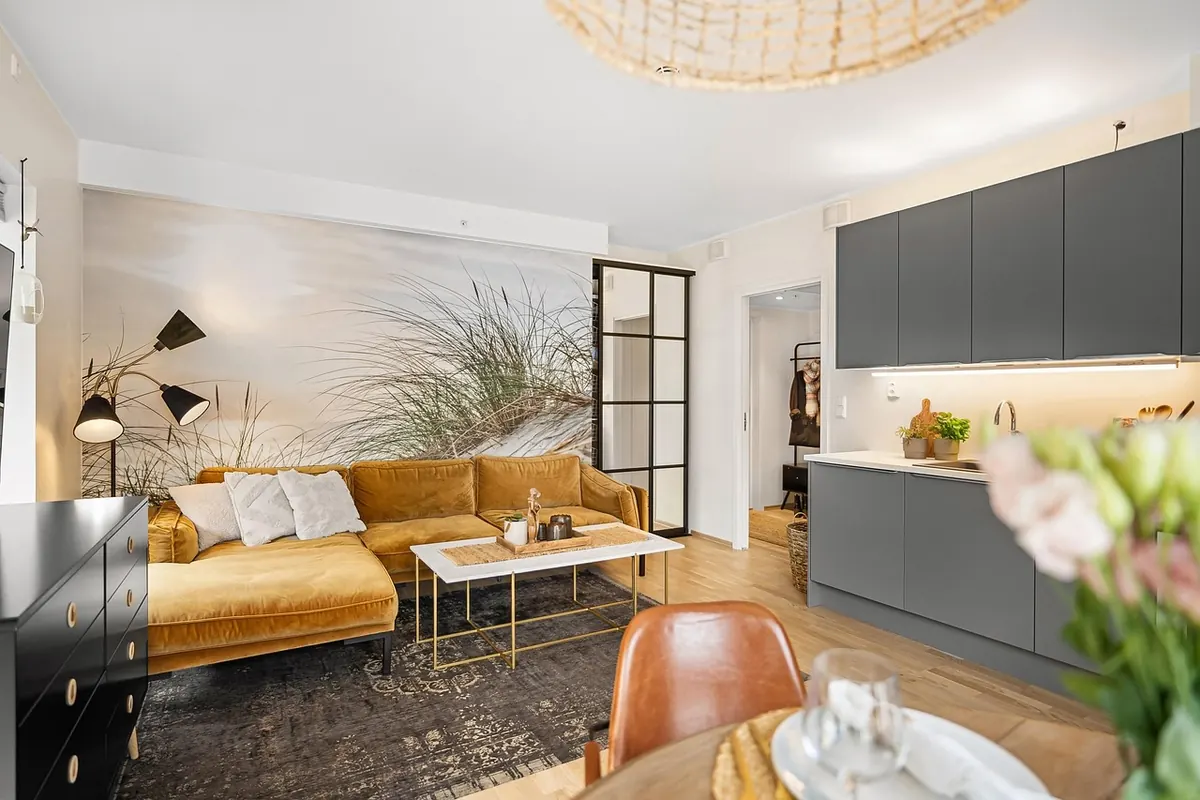
Winter light has a way of shrinking a room. The sun sits low, the afternoons fold up early, and the corner that felt generous in June reads gray by half past four. Most people assume the solution is a new fixture, but it usually isn't. The problem is the bulb, the shade, or where the light is standing — and all three are quick to change for a fraction of what a lighting showroom visit costs.
Think of it as tuning an instrument rather than replacing it. You already own the hardware. What winter needs is warmer color, more layers, and a little more bounce off the walls.
Color temperature is the biggest lever you have, and it costs the least to pull. Bulbs are labeled in kelvin. Warm white sits around 2700K, and the softest residential options run nearer 2400K — a candle-ish glow that flatters wood, wool and skin. Cooler bulbs at 4000K and above are wonderful in a garage, a laundry room or over a workbench. In a living room in January, they make an armchair look like a waiting room.
Two details are worth checking on the box before you buy. First, whether the bulb is marked dimmable — many inexpensive LEDs are not, and they will flicker or buzz on a dimmer. Second, brightness measured in lumens rather than watts. If a lamp feels dim in winter, you may simply need a higher-lumen bulb at the same warm temperature, not a second lamp.
Match bulbs within a single fixture or a single sightline. Two lamps at slightly different temperatures read as a mistake, even to people who couldn't name what's wrong.
Overhead light alone is the reason so many rooms feel flat after dark. It lights the floor, casts shadows under every face, and gives the eye nowhere to rest. The fix is layers — three sources at three heights, ideally with a couple of them on dimmers.
A useful test: sit in the chair where you spend your evenings and count the light sources you can see. Fewer than three, and the room will feel thin. If any bulb is visible at eye level without a shade, shift or shield it — glare is what people mean when they say a room feels harsh.
Shades are the quiet workhorses of winter lighting. A shade with a white or metallic-lined interior pushes light back down onto the table; a dark, opaque drum swallows it and leaves a shadowed pool. If you want more usable light from a lamp you already like, swapping the shade is often more effective than swapping the bulb.
Measure before you shop: the harp height, the top and bottom diameters, and the fitter type. Most table lamps take a standard spider fitter, and shades come in predictable size families, so a mid-size drum or a slightly tapered empire will usually drop straight on. Linen, cotton and pleated fabrics diffuse gently. A polished brass or silver interior adds a warm kick without changing the bulb at all.
While the shade is off, dust it. A fine film of dust can dull output noticeably, and it's the cheapest upgrade in the house. Unplug the lamp first, and use a step stool rather than a chair.
Winter evenings are long, and you spend them in two or three specific spots: the end of the sofa, the desk, the chair by the window. Light those places directly. A plug-in wall sconce beside a reading chair needs no wiring and throws light exactly where a book is. A rechargeable table lamp can move from the kitchen counter to the bathroom shelf to the balcony without a cord trailing behind it.
Battery candles with built-in timers are useful for shelves, mantels and dinner tables, and they cost less than a single new lamp. Under-cabinet strip lights, the plug-in kind, do more for a kitchen at six in the evening than a brighter ceiling light ever will. And for the middle of the night, keep a low lamp on a smart plug rather than switching on an overhead fixture — your eyes will thank you, and so will anyone else in the house.
Light bounces. A mirror hung opposite a lamp effectively doubles that lamp, and a shallow tray of brass, copper or glazed ceramic under a lamp bounces a soft pool upward. Pale walls return more light than saturated ones; a warm off-white or oatmeal reads cozier in winter than a cool gray, even with identical bulbs.
Textures matter too. Wool throws, bouclé cushions, a jute rug and a few unglazed ceramics absorb glare and make a room feel softer at night. Glass and polished stone are lovely in daylight but can throw hard reflections beside a lamp, so keep shiny dark surfaces away from the brightest light in the room.
You don't need an electrician to gain control. Plug-in dimmers sit between the lamp cord and the outlet and cost very little. Smart plugs let you group two or three lamps so one command turns them all down. Three-way sockets with three-way bulbs give you a low, medium and high setting from a single switch. Timers set to come on twenty or thirty minutes before sunset mean you walk into a lit room instead of a dark one.
One caution: if a cord is frayed, a plug is warm to the touch, or a socket crackles, stop using the lamp and have an electrician look at it. Older fixtures sometimes need more than a new bulb. And if evening light consistently affects your sleep, it's worth raising with a doctor rather than guessing at a fix.
Pick one room — the one you use after dark — and work through it in order:
Nothing here requires new fixtures, and most of it can be undone if you change your mind. Do one room this weekend, live with it for a week, then repeat the process in the next. By February, the whole house will feel warmer at night — and you'll still have the same lights you started with.
Photo: qimono / Pixabay